


There's always more to learn
- Maura Leichliter
- Sep 9, 2018
- 3 min read
Updated: Mar 8, 2019
During orientation two weeks ago, I spent a lot of time being a German nerd and giving my fellow NYU Berliners tidbits of knowledge and advice about Berlin and Germany that I had gained from my 6 years of education on Germany and the German language, but just as often, I was surprised by information I had not learned previously (or had simply forgotten).

This was especially the case on my first Wednesday in Berlin when I went on a walking tour as part of my NYU orientation. Our academic center is in a district called Prenzlauer Berg, so we explored the area on a walking tour with someone who works for the university. He brought us to his favorite remaining segment of the wall where I finally got to truly visualize what this structure looked like. I understand now how absolutely soul-crushing and intimidating it was to live in East and West Berlin. There are actually two walls: one smaller one on the East Berlin side and the larger

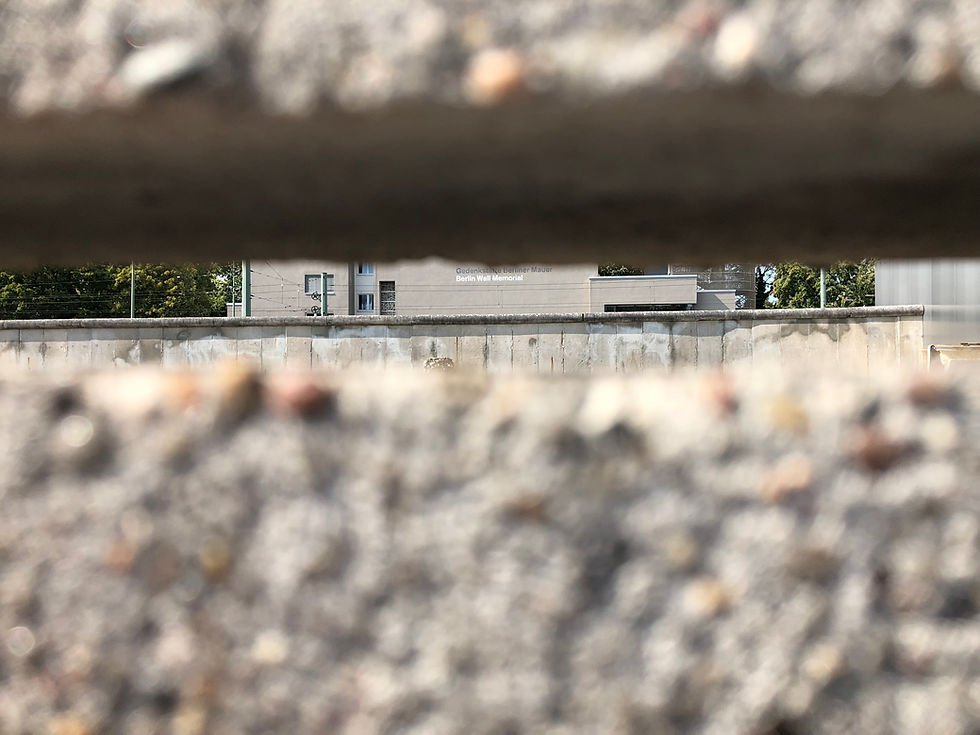
wall we typically consider to be the Berlin wall on the West Berlin side. Between the two walls was an expanse of land full of trip wires that trigger gunfire, barbed wire, and other obstacles; the area was considered the "death strip" because people would be shot down or caught up in the obstacles as they tried to flee. (Below: Peering through the crack in one wall to see the other.)
Most notable for me was the massive guard tower that looms over the East Berlin side. Our guide explained that the guards never were Berliners so that they would have no association or strong feelings for the city or its people. Furthermore, the
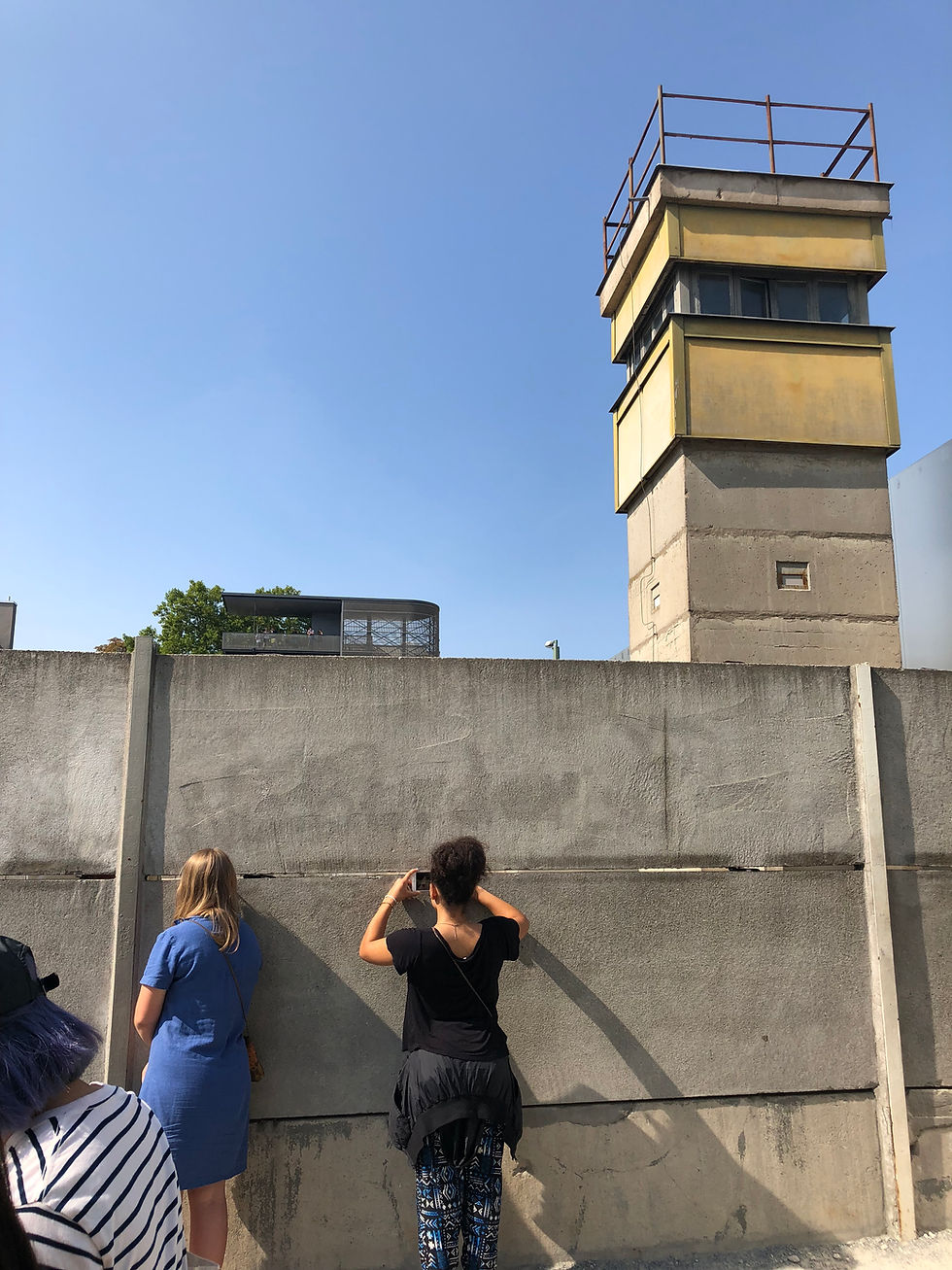
guards would never have predictable shifts--they might not even work with the same person again until a year later so that they wouldn't form bonds with each other over their long shifts, and--a common theme--so that they wouldn't trust anyone. One in six east Berliners at the time was a spy, informing on their friends or boss or coworkers, because it was the only way to secure their child's place in a good daycare or to get that housing upgrade.
Anyways, standing here, I experienced what felt to me to be an overwhelming feeling of how hopeless things could be--but I know I only felt a glimmer compared to the real thing.
The last fascinating tidbit of knowledge I'll share from orientation week is the fascinating ghost stations of East Berlin. The U Bahn (subway) lines in Berlin tend to curve around the city, as you can see here:

When Berlin was divided into East Berlin and West Berlin, a particular U Bahn line actually started and ended in the west but at one point had about 4 stations that dipped into the east. The soviets quickly covered up these stations, closing the entrances and carefully guarding them. In exchange for money, they allowed West Berlin trains to pass through the ghost stations--they were eerie, dark, and inaccessible. The train would actually pick up speed after the last West Berlin stop to zoom through the stations and return quickly to West Berlin, moving quickly to prevent jumping. The U Bahn Station "Nordbahnhof" has some fascinating pictures and videos from when it went dark.
I'm so excited to learn even more about this history-rich city. From bullet holes covering old buildings to former nazi airports made into parks, there is always something to see and learn about.

Comments